
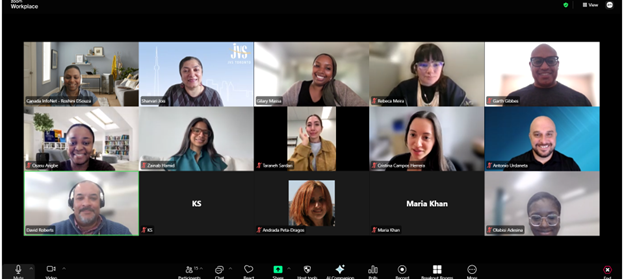
When most people hear the phrase “I don’t see color,” they assume it’s a compliment. At a recent live session of JVS Toronto’s Inclusive Mentorship Certification — an initiative of the Canada InfoNet pre-arrival program — mentors were challenged to think differently.
“Colorblindness doesn’t level the playing field,” the session’s facilitator told the group. “Acknowledging differences does.”
That idea set the tone for one of the most candid, practical conversations our mentor community has had to date. Here are three lessons from that session — useful whether you’re a current mentor, considering becoming one, or simply curious what inclusive mentorship looks like in practice.
Why This Program Exists
Canada InfoNet connects newcomers — still abroad and approved for immigration — with Canadian professionals who help them prepare for the job market before they ever land. It’s a head start built on something simple: relationships. But good mentorship doesn’t happen by accident, especially across cultural, linguistic, and lived-experience gaps.
That’s where the Inclusive Mentorship Certification comes in. The program pairs a self-paced online course with a live, expert-led session built around reflection and real talk — not lectures. To date, we’ve run four cohorts and certified 45 mentors. This recent session was a window into why that work matters.
Quote from a mentor: “A great opportunity to learn about integration and empower mentors to not just guide, but truly understand how to create inclusive spaces.”
Lesson 1: Acknowledging Differences Beats “Colorblindness”
One moment from the session has stuck with mentors since: a mentee from Nigeria, preparing for interviews in Canada, was once advised to remove her hijab to “fit in better.”
It’s the kind of well-meaning but harmful advice that newcomers encounter more often than most Canadians realize. Mentors in the room didn’t just react — they unpacked it. What does it mean to ask someone to set aside part of their identity to be employable? What’s the mentor’s role when a mentee is given advice like this from someone else? How do you affirm authenticity and prepare someone for a workplace culture they’re still learning to read?
There’s no single right answer. But the willingness to sit in that discomfort — rather than rush past it — is exactly the skill this certification is designed to build. Pretending not to notice differences doesn’t protect mentees from bias; understanding those differences is what allows a mentor to actually help.
Lesson 2: Set Ground Rules Early — Not as You Go
A recurring thread throughout the session: mentorship works best when expectations are set early, not figured out as you go.
Mentors talked openly about the risk of becoming “too intertwined” in a mentee’s life, and the importance of helping mentees advocate for themselves rather than mentors stepping in to fix everything. One mentor, reflecting on a mentorship with a mentee whose background was very different from her own, described feeling underprepared at first — until she leaned on her own past experience and built confidence session by session.
The takeaway for new and prospective mentors: you don’t need to have all the answers walking in. You need a willingness to set clear boundaries, stay curious, and keep learning alongside your mentee.
Lesson 3: Address Macroaggressions in the Moment, Not After
Few topics generate as much hesitation among mentors as microaggressions — both noticing them and addressing them. The group shared a strategy worth holding onto: when something lands wrong, ask a clarifying question rather than letting it pass or escalating immediately. It opens the door to understanding without putting either person on the defensive.
When trust takes a hit, mentors suggested simply pausing and revisiting the ground rules set at the start of the relationship — a reset, not a confrontation.
Mentorship Is “Paying It Forward”
Several mentors in the session are themselves former newcomers to Canada. Their reflections grounded the whole conversation: mentorship isn’t charity — it’s continuity. Someone helped them navigate an unfamiliar system once, and now they’re doing the same for someone else.
That ethos came through in the commitments mentors made as the session closed — promises to stay open-minded, to keep learning from people whose experiences differ from their own, and to keep showing up for mentees as full human beings navigating a lot at once.
Why This Matters
Inclusive mentorship isn’t a soft skill add-on — it’s the difference between a mentee who feels seen and supported, and one who feels like they have to shrink themselves to succeed. The mentors who completed this certification aren’t just better equipped to support Canada InfoNet mentees; many are carrying these DEIB practices back into their own workplaces and professional networks.
If you’re a professional in Canada looking for a meaningful way to give back — and to sharpen your own leadership and inclusion skills in the process — this is exactly the kind of program built for you.
Interested in becoming a mentor or partnering with Canada InfoNet? Reach out to us at [email protected]